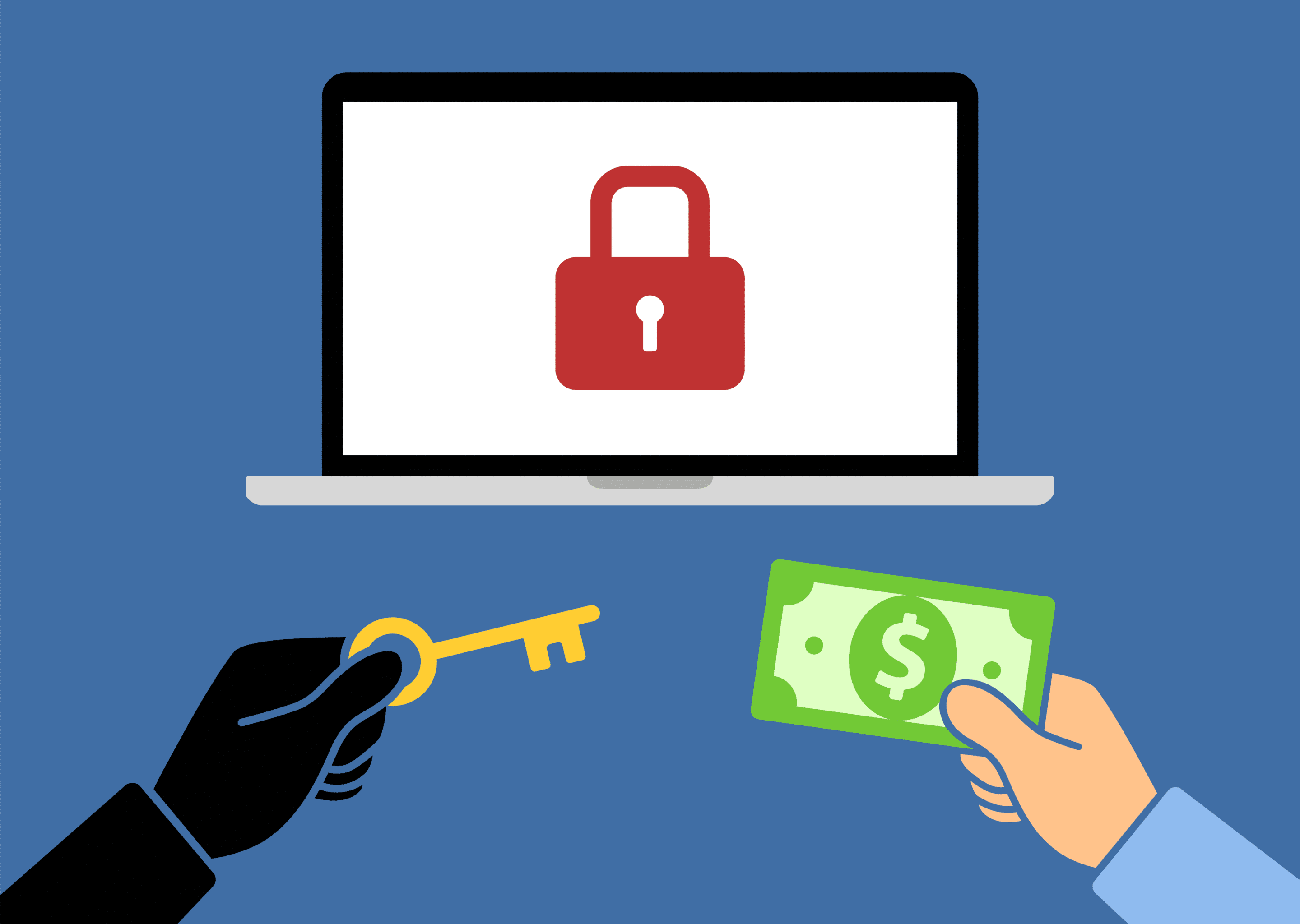
There are many types of malware (ransomware) and threats we can encounter on the network. Hackers are constantly looking for ways to attack their victims. While there is a wide range of options to protect ourselves, cybercriminals are also refining their techniques.
In this article we will focus on ransomware, which is one of the most serious problems. More specifically, we will explain when a user is most likely to suffer a ransomware attack.
A Very Present Threat
First of all, we must recall what a ransomware attack is. It is a threat that seeks to encrypt victims' files. This way, attackers can later demand a ransom in exchange for allowing users to open those files again. It is a significant problem that affects both individuals and businesses alike.
The primary method of propagation is through trojans on malicious websites or legitimate sites that have been compromised by cybercriminals. The most common infection vectors are websites with pornographic or gaming content, so that when users click on any of the ads, they are redirected to another compromised page that infects them with ransomware or other malware.
A second infection method involves links to compromised sites in mass emails, instant messaging, social networks, or by downloading it through file-sharing (P2P) programs.
Another notable technique is carried out through attacks using the Remote Desktop Protocol (RDP), either by exploiting a vulnerability in the system or through brute-force attacks. If the attack succeeds, criminals can encrypt the server's data and then demand a ransom for the password.
As a final notable case, it is worth mentioning that this type of attack is also affecting mobile devices, especially devices running the Android operating system. These devices are infected when users install an application that turns out not to be what it claimed to be. An example of this type of ransomware is Android.Fakedefender, a trojan that displays fake security alerts in an attempt to convince the user to pay for the full version of the application in order to remove non-existent malware.
The way these attacks occur can vary. Typically, we receive a malicious email attachment. Attackers may use some kind of lure to get us to open or download a PDF, Excel, Word, or any other file. From that point on, the malware executes.
It is worth noting that the methods can be diverse.
(adsbygoogle = window.adsbygoogle || []).push({});
When Ransomware Attacks Are Most Frequent
Statistics are generally useful in these cases. It is a fact that phishing attacks, for example, increase during periods like the Christmas season. Ultimately, they exploit periods when users may be more susceptible to some type of attack. But how does this translate in the case of ransomware?
According to a group of computer security experts, cybercriminals leave nothing to chance or improvisation. They examine all available possibilities in great detail. Just as they may target services or platforms with the most users, they also pay close attention to timing.
27% of ransomware attacks occur on weekends. Additionally, 49% of attacks on weekdays take place after regular working hours. Why does this happen? Experts indicate that one of the main reasons is that during weekends or after general working hours there is less attention. Many companies may not even have prepared and operational staff available.
When a ransomware attack is executed against a company, time is critical. If it occurs during working hours, there will normally be qualified workers ready to sound the alarm. But if it happens on a weekend or at night, there would be fewer people — or at least less prepared ones — to mount a defense.
We can therefore say that the most frequent time to suffer a ransomware attack is after working hours, as well as on weekends. At least statistically, the data shows this to be the case. This applies primarily at the corporate level, but it could be extended to individual users as well. However, in the latter case, other important characteristics would need to be taken into account.
How to Protect Yourself
To protect ourselves from ransomware attacks, the best approach is common sense. In most cases, users must take some action, such as downloading a malicious email attachment. Or clicking on a fraudulent link, among other things.
The main recommendations for protecting against these types of threats are:
- Update all computer software, especially the Operating System, web browsers, Adobe Flash, Acrobat Reader, and the Java Virtual Machine (disabling browser plugins if they are not needed).
- Have an up-to-date antivirus product installed.
- Keep the firewall on your device enabled.
- Do not open suspicious emails.
- Never follow links that appear in emails from supposed "friends".
- Make regular backups. This point is especially important for data recovery in the event of a potential attack.
- Configure the Remote Desktop (RDP) connection to be accessible only through Virtual Private Networks (VPNs) and using two-factor authentication.
It will also be necessary to keep up with the latest versions and patches. We know that vulnerabilities sometimes arise that can put users' security at risk.
(adsbygoogle = window.adsbygoogle || []).push({});
How to Recover from Ransomware
Recovering from a ransomware attack can be a complicated task, and you may need the help of specialized personnel. If your system is compromised, it is recommended not to pay the "fine" or "ransom," as this does not guarantee that the criminals will respond once payment is made.
Once it has been confirmed that the malware has been removed from the computer, it is recommended to change all passwords that may have been used on the affected machine.
In Conclusion
- Ransomware is a type of malware that disables a user's computer or encrypts data files, with the goal of demanding payment of a certain amount of money to restore access to the user. It is therefore a form of extortion.
- The most common infection patterns for this type of malware are links to compromised sites, the installation of fraudulent software, or emails with malicious links or attachments.
- It is also recommended to browse the Internet with caution, avoiding sites of dubious origin, and to stay as up to date as possible.
- In the event of infection, do not pay the criminals. Report the problem to the competent authorities and seek specialized technical help to resolve the incident.
Although awareness of this type of scam is increasing, attackers and the malware they use are also evolving, improving techniques to evade detection and prevent removal. Furthermore, the "ransom note" is likely to continue evolving in sophistication and in its targeting of new population sectors, as well as new targets such as mobile devices.
Leave a Comment
Comments are reviewed before publishing.