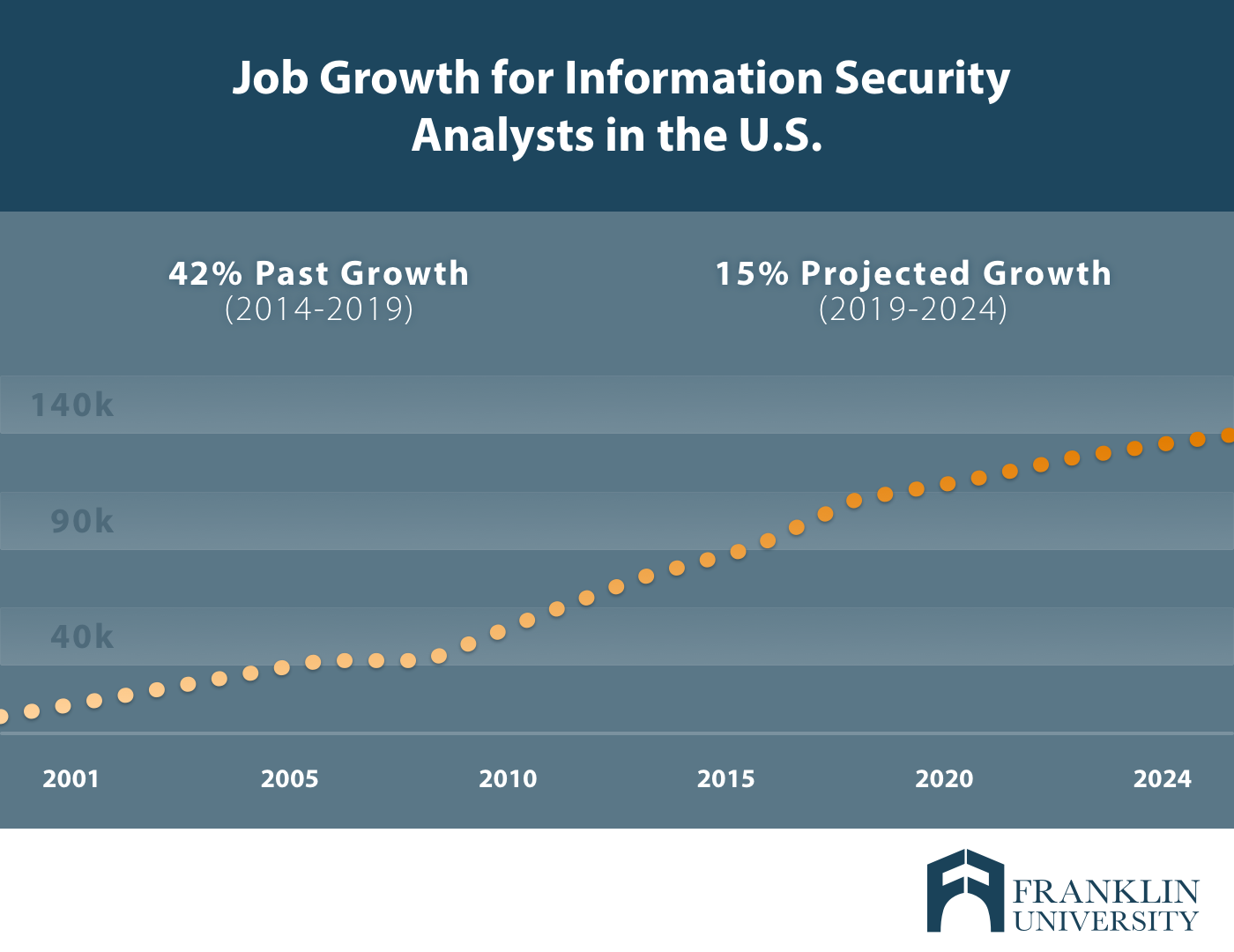
There is a great opportunity in the US for thousands and thousands of people interested in a career in cybersecurity.
There are approximately 465,000 vacant cybersecurity positions across the country as of May 2021, according to Cyber Seek — a tech job tracking database from the U.S. Department of Commerce — and the trade group CompTIA.
The need for more web watchdogs spans from private companies to government agencies, experts say, and most job openings are found in California, Florida, Texas, and Virginia. That means that for anyone looking to change careers and consider a job in cybersecurity, there is no better time than now to find work, job trackers said.
"You don't have to graduate from MIT to work in cybersecurity," said Tim Herbert, executive vice president of research at CompTIA. "It just requires someone who has the right training, the right certification, and is certainly committed to the work."
Switching careers to cybersecurity could be as easy as earning a Network+ or Security+ certification, said Michelle Moore, who teaches cybersecurity operations at the University of San Diego. An eight-week online course could help someone land an entry-level job as a "pen tester," a network security engineer, or an incident response analyst, Moore said. Those jobs pay between $60,000 and $90,000 a year, she added.
"Cybersecurity is not rocket science, but it's not like you can just walk in the door and take a job and pick it up just like that," Moore said. "But the bigger problem is that people are unable to fill those positions because there aren't enough trained people to be found."
Another reason it has been difficult to hire cybersecurity professionals is that college students who major in computer science don't always choose a career in that field, Herbert said. After graduating, the nation's technology students will choose jobs in software development, artificial intelligence, robotics, or data science, and "a small percentage will select cybersecurity," Herbert said.
"Cybersecurity is competing with many other fields," he said. "And right now we find that isn't enough to meet demand."
The demand for cybersecurity professionals comes after both large and small organizations have witnessed the damage caused by major hacking attacks in recent history. One of the biggest trends in cyberattacks right now is ransomware — malware installed on vulnerable networks and computers by hackers who threaten to publish private data unless a ransom is paid.
Hackers carried out more than 70 ransomware attacks in the first half of 2019, most of which targeted local governments. In 2020, Barnes & Noble, Marriott, and Twitter were victims of hacks that exposed their customers' personal information. School districts and their employees have also been frequent targets of cyberattacks.
"There are many hacker groups that are opportunistic," Herbert said. "They found companies that may have been in a more vulnerable state."
More recently, a hacker in February raised chemical levels at a water treatment plant in central Florida in an alleged attempt to poison local residents. Earlier this month, a cybercriminal gang took over the computer systems of one of the largest underground fuel pipelines in the country. Colonial Pipeline, which owns the pipeline, apparently paid hackers a ransom of $5 million to stop the hijacking.
Source: CBS News
Leave a Comment
Comments are reviewed before publishing.